
Imagine if you never had to open your finance system again; you just ask your AI of choice to make the report for you.
Oracle NetSuite released its AI Connector Service two months ago. You can connect NetSuite to Claude or ChatGPT or other platforms and ask it to make reports for you.
Early adopters are claiming that this AI Connector is saving them hours of reporting every week. "It's been incredible to watch because you're actually looking at some solutions to problems that we've always had in the business that typically take our analysts weeks and weeks to unpick being resolved in a matter of seconds," says Lachlan Cornwell, CFO and COO at True Protein, an Australian supplement manufacturer.
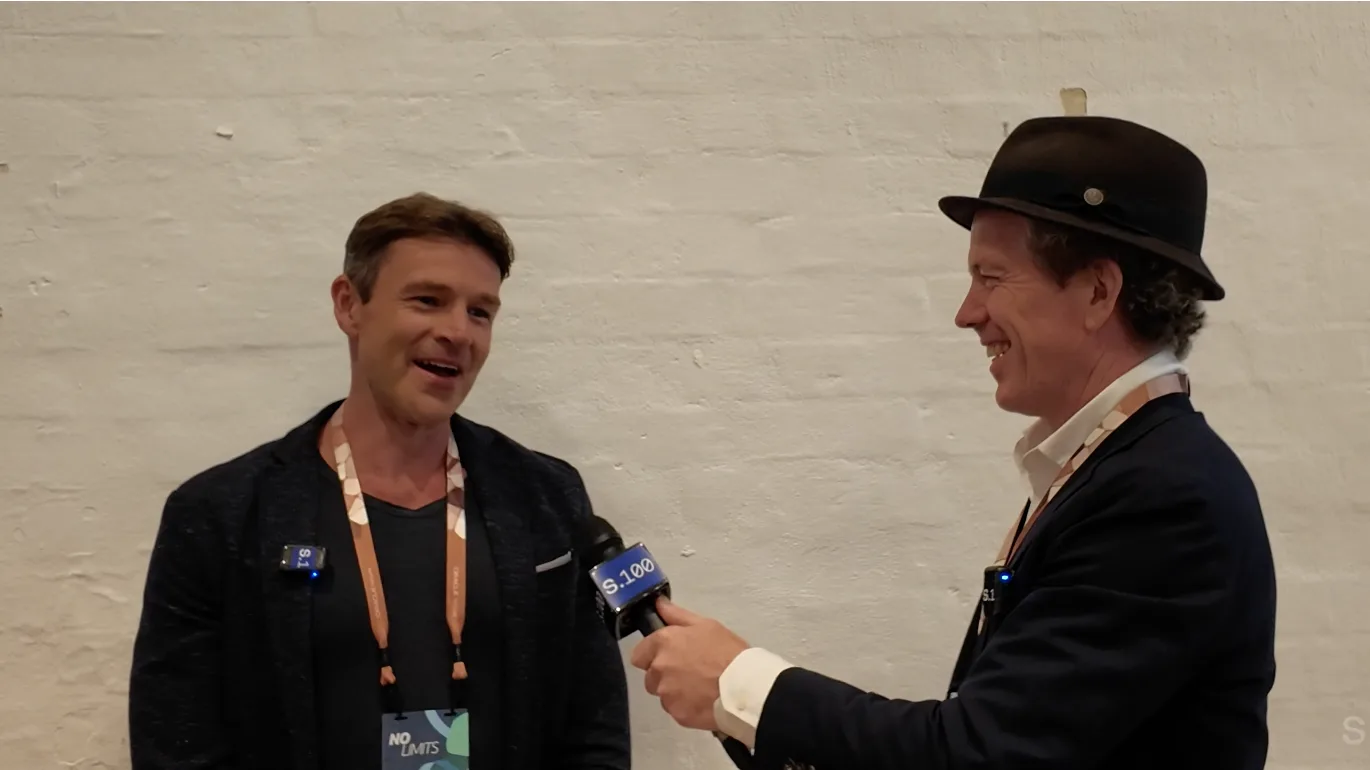
Cornwell led the AI Connector initiative from the finance and operations side and spoke to Scale100 at NetSuite's SuiteConnect Sydney event. True Protein also had assistance from Fusion5, a NetSuite consultancy. "We've got a fantastic CTO (Martin Curtis) who's helping lead all of these initiatives for us," Cornwell says.
Although the company has only been experimenting with the AI Connector for just two months, they keep finding new and surprising ways to save time in the backoffice.
Watch the interview with Lachlan Cornwell below.
The NetSuite AI Connector is a feature that links your NetSuite database to an external large language model such as ChatGPT, Claude and other platforms via API. Businesses can then ask their AI platform in plain English to show inventory levels, outstanding invoices or expired stock.
True Protein chose to connect to Claude. Staff access the NetSuite data via Claude with the same permissions granted to their NetSuite licence. If you don't have access to payroll data, then you can't look up your colleagues' wages.
Reports can be triggered on a schedule such as daily, at a time the team configures. True Protein's internal technology team, led by CTO Martin Curtis, built most of the integration themselves. Fusion5 provided support on the MCP connection.
The build time was shorter than most operations leaders might expect. The full suite of automated reports was ready in a few days.
Here's a demo of NetSuite's AI Connector from NetSuite SuiteConnect Sydney.
True Protein's first use case was exception reporting for warehouse operations. This included notifying warehouse staff of expiring stock, out-of-stock items, SKU transfers between facilities, and stock aging in the robotic storage system. Previously, the business analyst team pulled that data manually and distributed it to the production, warehouse and finance teams. That process took hours.
How long does it take to create a report by asking Claude? "Oh – seconds," Cornwell says.
Claude also acts as a middleman. True Protein can send responses in Claude to other employees via Slack. Delivery staff, who don't hold NetSuite licences, receive Slack notifications on their phones as they move about the warehouse floor.
Warehouse employees "are at the coal face every day and they're moving at lightning speed to get orders out the door," Cornwell said. "They just want it real time, coming to their devices so they can act on that."
Asked whether routing reports through Slack was partly a way to avoid paying for additional NetSuite licences, Cornwell laughed. "Don't tell anyone!" He clarified that Oracle is well aware of this use case.
And what happened to the business analysts who used to spend hours creating the reports? Cornwell says they are now free to work on more important tasks such as forecasting and budgeting, customer analysis and preparation for a physical expansion. True Protein is relocating to a new facility at the end of the year and building a second facility in Melbourne for a new product line.
"It's about unlocking the menial stuff so that you're getting people focused on what's driving the business forward," Cornwell said.
Automating hours of daily analyst work raises an obvious question about headcount. Cornwell says that no roles have been cut – and there is no intention to cut them.
CEO and founder Ben Kierath led a direct conversation with the whole company early in the process, Cornwell adds. The message was unambiguous. "We have no intention of removing anyone. We are so lucky to have the people who've got us to where we are now," Cornwell says.
Another reason for holding onto staff – competitive advantage. Widespread AI adoption could produce a kind of homogenisation – every business querying the same models with similar prompts, converging on the same answers, Cornwell says.
"At some point you're going to get a lot of reversion to the mean, where everyone is going to be asking the same questions and getting the same answers and acting in the same way."
His view is that the human element – the unique judgement people bring to interpreting AI outputs – is where competitive differentiation will have to come from.
After finding out how it could speed up reporting for the warehouse, Cornwell used the Claude interface to produce the monthly management report. As well as a hefty PDF, the LLM could also produce the report as a ten-minute audio podcast – a conversational summary of the month that the senior leadership team could listen to on the commute.
"It's quite scary when you listen to it, how real it is," Cornwell said.
The model's editorial choices proved more interesting than a simple summary. The AI surfaced issues the team hadn't foregrounded.
The AI podcast hosts "actually ripped in," Cornwell said. "There are a few things you need to look at here and there in the business – I won't say specifically what they are – but it's quite candid feedback. Because it's obviously agnostic to how you feel about the situation."
While the podcast was easy to consume, Cornwell was clear that it doesn't substitute for a good read of the original deck. "It's never going to replace a deep dive into the charts, the tables, and the numbers – that stuff's really important from a governance perspective. But in a world where people are so time poor, having those little hacks...(is great). Just to add value at the table when you sit down to discuss things."
Cornwell also warned that when using AI for financial reporting, it still has a tendency to agree with the user when pushed back on rather than holding a position. "You do need to be careful with it and not take things at face value," Cornwell said. "Sometimes things need more probing and inquiry."
The True Protein experience is instructive. It is also two months old.
The most immediate open question is how the NetSuite AI Connector approach holds up once NetSuite Next is more widely adopted and tested in the ANZ market. NetSuite Next is a native AI built directly into the platform that requires no external LLM configuration or data governance decisions about what leaves the system.
Where Next may have an edge is in deep financial querying. Cornwell pointed to the general ledger as an example – NetSuite Next can probe line-by-line transaction data, accruals and reconciliations with full context, in a way that an external LLM working from a data extract cannot always match.
If Next delivers on its promise for financial querying, some of what the connector does today may migrate back inside the platform. The use cases that route outputs to unlicensed users via external channels will likely stay external regardless.
The cost comparison between the two paths at scale remains unresolved. So does the question of how Claude performs against other available LLMs for this class of ERP reporting work.
Lachlan Cornwell is CFO and COO of True Protein. The full interview is available on the Scale100 YouTube channel.
Interviews, registers and essays. Free.

Make your agents work.

