
Additional reporting by Inbal Rodnay Steinberg
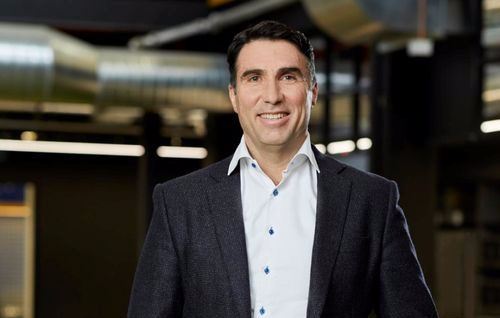
Within seconds of meeting Greg Ellis it’s clear that the new MYOB will be a very different beast to that led by his predecessor, Tim Reed. Private equity owners KKR have parachuted in a clear-eyed, straight talking CEO who knows what he wants and knows how to get it.
Ellis also wants everyone to know that he is giving MYOB a good shakeup – nearly every senior executive has moved on since Reed’s resignation.
“I speak to every one of our customers, and our product delivery has not been good enough. And it will be fixed. We’ve got to get sharper at what does our market want and deliver that in 90 day drops.
“The biggest change is to get back to (the fact that) we are a product house. And we will be delivering functionality in 90 day drops.”
By now, the phrase “90 day drop” must be embedded in the eyelids of every employee at the Richmond HQ.
Ellis spent six years (2008-2014) running the ASX listed REA Group, the $15 billion-dollar advertising company that owns realestate.com.au. He then led a similar company called Scout in seven European countries for private equity, returning after nearly six more years to take the reins at MYOB.
After 12 years of shipping software, Ellis has a very clear idea of what works. He has restructured MYOB into four verticals; SME, professional (accountants and bookkeepers), enterprise and financial services. The verticals split into market segments, such as sole trader to five employees in SME.
This allows the company to build functionality for different types of customers on top of a modular stack. MYOB is in the process of moving all technology to this modular stack, Ellis says.
“The criticism that I would make of MYOB is that it was building blocks of functionality and then trying to install them against customer segments, which actually doesn’t work,” Ellis says. Instead, each customer segment will determine the functionality it requires.
In the professional vertical, practice management is really important to the bigger firms. For smaller firms, compliance is probably more important, he adds.
While Ellis respects some aspects of Reed’s cultural impact, such as the commitment to build a racially and gender diverse team, gone are the wishful startup memes:
“I really hate the expression ‘Fail fast’ because it means you didn’t actually bloody know what you were doing in the first place.”
No more evangelising the cloud:
“I don’t wear t-shirts, right? We just roll functionality out for customers.”
And no more excuses:
“The amount of money that we spent over the last few years has been enough. We just haven’t got value for money.”
You get the feeling that Ellis doesn’t suffer fools gladly.
And yet it would be a mistake to think that Ellis lacks empathy. Ellis says his family used to run small businesses and regularly experienced the highs and lows of entrepreneurship.
One of his mantras is for MYOB employees to think like small business owners and not feel comfy in their corporate jobs. “The consequence of running a small business is that if it doesn’t work you lose your parents’ money and your money. If MYOB folded tomorrow we would go and get another job. It’s not as dire as the failure of a small business.”
Ellis says this shared experience with small business is missing from the management teams of his competitors. “I look around and I’m not sure how many people have actually run a small business.”
Part of this small business mindset is to deliver on promises. Ellis’ first mission is to give partners everything that was previewed at MYOB Partner Connect as working product. Straight after Ellis’ Q&A session, MYOB gave a live demo of its upcoming releases to prove it.
The next step is to roll out with an aggressive strategy that takes the fight to every competitor making software for tax, corporate compliance, practice management, client accounting, and enterprise, targeting SMEs from one to 400 employees.
Make no mistake, MYOB is now on a war footing.
Some observations from the media briefing.
And some highlights the software demo – live and working well, no screenshots. Definitely worth checking out the progress at Essentials and Practice Online at the Accounting Business Expo.
And finally, here’s my first question to the MYOB CEO and his response. I think it makes for entertaining reading.
Digital First: So, it definitely feels like Xero has captured momentum in the market for the last couple of years, and in terms of market share and so on. In particular with the majority of early adopter accounting firms that seem to be growing fastest.
Ellis: Yep.
Digital First: And I take your point about AccountRight’s functionality, but 90% of SMEs in Australia have up to 19 employees and so a lot of their needs for that functionality… Xero has obviously gone for the bottom part of the pyramid. So even if you release software now what’s the plan to recapture this momentum?
Ellis: When we talk about cloud, there is this Xero cloud between fact and fiction, right? Yes they are the market leader in SME – just – but they are by volume not value. They are not the market leader in practices and bookkeepers, MYOB is. And they’re not the market leader in enterprise software in Australia and New Zealand.
I’m not diminishing the Xero business. But I’m just simply saying, can we have a fact-based conversation? Our functionality today is superior to Xero. That’s fact. Their user interface and the look and feel of the product in SME world, and in the simple practice world, is superior today. But UI stuff is a lot easier to translate than deep functionality.
…
You used lots of ifs, buts, maybes and momentum. So, we’ll just talk in facts. We’re just talking product roadmap, and we’re just talking product delivery. Xero can do whatever they want to do because I’m not particularly focused on them. I’m really not.
I’m focused on what our customers require and getting MYOB on the delivery roadmap that solves compliance issues and financial issues which are really important to the customer, and then taking that customer on an appropriate migration journey as they lift from functionality and work practices that they have in desktop to cloud. That’s the only thing I care about. I don’t wear t-shirts, right? We just roll functionality out for customers.
I did ask MYOB to share the market share figures Ellis quoted (value and volume) but no dice. I’m looking forward to our next interview – and promise not to turn up in a t-shirt.
Image credit: MYOB
Interviews, registers and essays. Free.

Make your agents work.

