CXO INTERVIEWS
Geocon CIO Andy Magee deployed Salesforce Agentforce on the company's largest-ever project, more than 800 apartments, on day one.
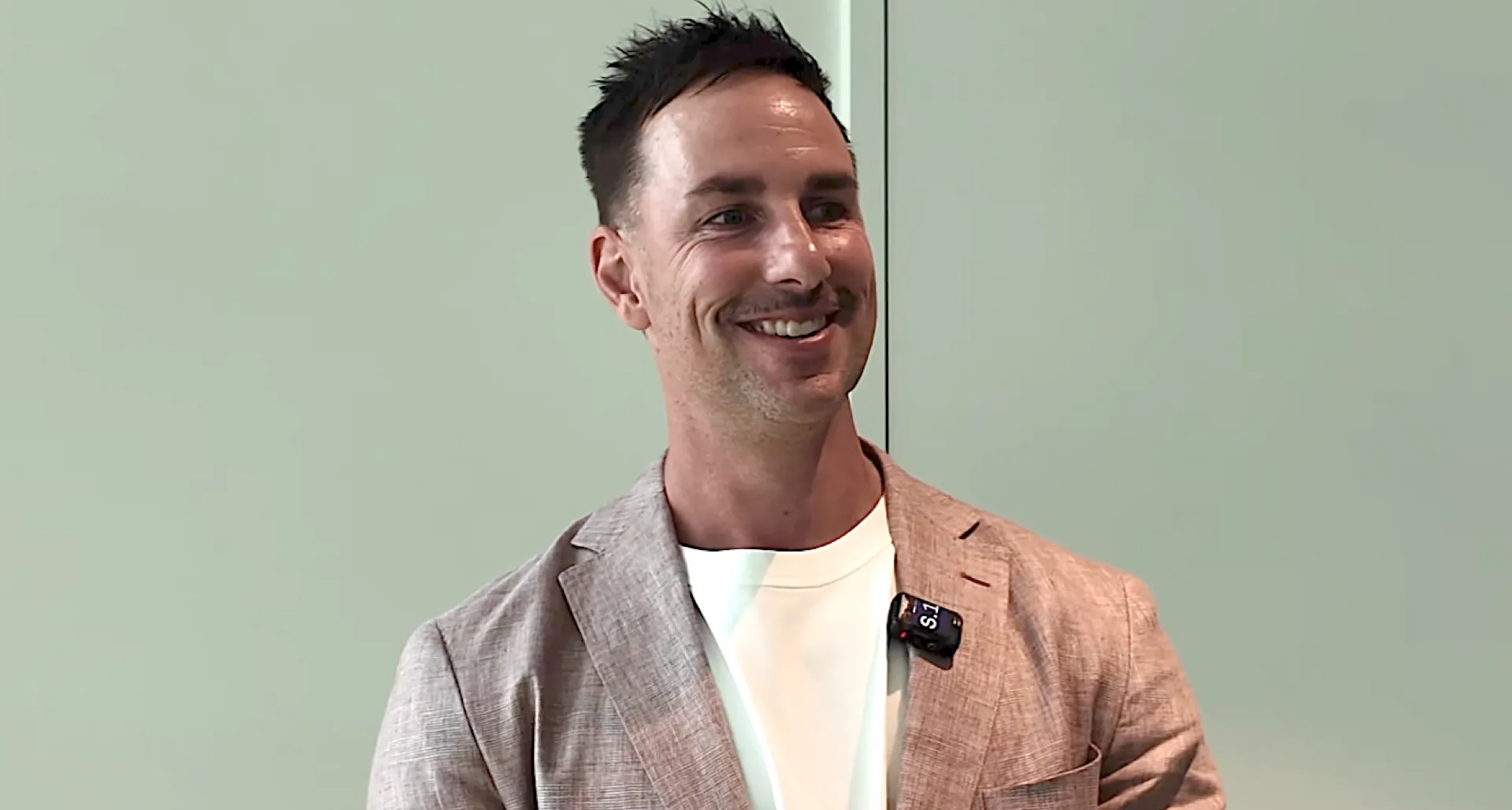
When Geocon switched on its first artificial intelligence agent, it did not pick a quiet corner of the business to try it out. The agent went live on what Andy Magee calls the largest single-stage apartment project in the territory's history – more than 800 apartments – just before the standard defect period kicked off.
"It was a trial by fire," said Magee, CIO at Geocon. "Although we did have some early tweaking, it absolutely did what it was supposed to do." He is unapologetic about the choice. "If you're going to launch something, why not launch it on the biggest project?"
The registration for the number of apartments was so large, he said, it "broke a few ACT government systems". Suitably, Geocon built its agent in Agentforce in early 2025, so early in the platform's development, that Salesforce was still adding key features.
Geocon is a vertically integrated property developer in the ACT. Over the past seven years it has pushed Salesforce beyond sales into its construction workflows. Rather than buy a dedicated tool, Geocon built the defect system into the CRM platform.
When a new building settles, the defects arrive in a rush. Most are minor – a scratch on the paintwork from moving furniture in, misaligned tiles, an appliance that fails in its first week. Some are not. The defect liability period covers the first 90 days, and in Magee's words results in a "massive spike" of communication.
Before the agent, those reports came in through a basic web form on Geocon's public website. The data arrived as unstructured text – a description, a photo, a name – often without enough detail to act on. A team worked through each submission, identified the property and the defect category, found the responsible subcontractor from the project records, and logged a structured ticket before anything could be assigned. When the volume of defects peaked in that 90 day period, Geocon had to pull staff off site to clear the queue.
"We had to allocate up to six to eight construction staff to overall manage and ensure that we were getting these cases [out]," Magee said. The work was real, but it was the wrong work for them. "Could they be doing better things? Absolutely."
There was a second gap. About 65 per cent of Geocon's buyers are investors who hand the apartment to a tenant or property manager and drop out of contact. Those people are not in the CRM, yet Geocon still carries the liability to fix the defects. The agent needed to serve people it had no record of – confirming their report had been received, answering questions about the process, and arranging access to the property for a subcontractor to come and carry out the repair.
Agentforce is Salesforce's platform for building AI agents that hold a conversation with a customer, collect and structure information, and then take an action inside the CRM, such as creating a record or assigning a job. Geocon built an agent and launched it on its public website as a chatbot to take defect reports.
The agent asks what the defect is, where in the apartment it is located, and which property the person is calling about. It keeps the conversation going until it has what a subcontractor needs – the type of work, the precise location, the access details. Then it creates a record in Salesforce and routes the ticket to the relevant trade.
The agent sorts each complaint to the right subcontractor without a keyword list. "We don't hard code it," Magee said. "People can speak in any [way] they like, and if it doesn't understand, it will go back with another question until it understands."
It also handles things Geocon never designed for. Property managers running 30 or 40 apartments now paste in a block of mixed issues at once. "The AI is able to extrapolate that, and understand this is for this property," Magee said. "Agentforce is doing all the heavy lifting." The team has "been a bit amazed, because the AI has gotten smarter and better at what it does since we launched it."
Geocon keeps a hand on the outcome. The agent passes the resident's access times to the subcontractor, who books the visit directly. "We're always still in the middle. It's our relationship," Magee said. Anything that reads as a water leak – which can cause serious damage – is flagged urgent and routed to a human immediately.
Geocon was one of Salesforce's pioneers in Australia with the new technology. Its service agent was made during the Agentforce pilot, before Salesforce shipped its deterministic logic – the ability to force a fixed, rule-based action rather than leave the decision to the model. So Geocon wrote that logic by hand.
"We didn't architect our original agent with it," Magee said. "We created a table of understanding. Something like a water leak would invoke a critical or an urgent job for us. We built that kind of logic in and hard coded it, rather than using some of the deterministic stuff that they can now do."
Working on the bleeding edge came with a price, however. "We were one of the extremely early adopters, on their pilot phase for the service agent," Magee said. "The tools underneath us were changing as we were developing, so there was a lot of rework. Salesforce would change something, [and] we had to go back and change it."
The next build was easier. Geocon's sales development agent, now in late testing, sits on Agentforce as a packaged option. "The SDR is almost a subset of [the] Agentforce product," Magee said. "It's got a lot of predefined settings that you can just toggle [and] enable for your data." Stepping back from the bleeding edge to the cutting edge "saves you a bit of skin", Magee added.
Magee's explanation for why it worked is not about the software. "Most organisations don't have that data adherence and governance down, and that's the first thing you realise" when an agent misbehaves, he said. Geocon had done that groundwork. "We were lucky that we'd actually spent a few years really trying to bed down what that looked like." He is wary of the pitch that anyone can stand up an agent in 20 minutes. "The reality is, it's not quite that easy."
He is also clear that Geocon started from the problem, not the tool. Peers react with surprise, he said, because "most people we know that deployed it, they're doing (Microsoft) Copilot style" – an internal assistant for staff to query. "We weren't coming from the lens of the technology. We were just saying, we've got this problem" that needed solving.
The support agent now handles the majority of defect notifications and a single person handles escalations. The company no longer needs to pull construction staff from site.
Geocon settles its next project, 360 apartments, in October, and expects the defect workload to stay flat instead of spiking. "It scales up and scales down as required," Magee said.
Andy Magee is CIO of Geocon. The full interview is available on the Scale100 YouTube channel.
WATCH THE FULL INTERVIEW
Trial by fire: the AI agent Geocon unleashed on 800+ apartments

HiPages
True Protein

Farm Focus

Make your agents work.

